Why Some Ingredients Become Tied to a Place
Why ingredients become tied to a place: trace how growing conditions, trade and everyday use shape regional food identity, with questions to ask locally.

The common mistake is to treat a region’s best-known ingredient as proof that everyone there eats it. Asking why ingredients become tied to a place gives a better account: look at what grows, what arrives through trade and how people put it to use.
Growing conditions
Soil, rainfall, wind, elevation and the length of a growing season affect which crops thrive. A sheltered valley may suit one crop, while a dry hillside favours another. These conditions shape what growers can offer, but they do not dictate a single local menu.
Climate and terrain are only part of the explanation. Growers choose crops for reliability, available land and the needs of their customers. Similar conditions can occur in distant places, and seeds, plants and produce move between them.
Ask a grower which crop is dependable locally and what makes it so. The answer can distinguish a food shaped by local conditions from one whose reputation depends on other forces.
Routes into kitchens
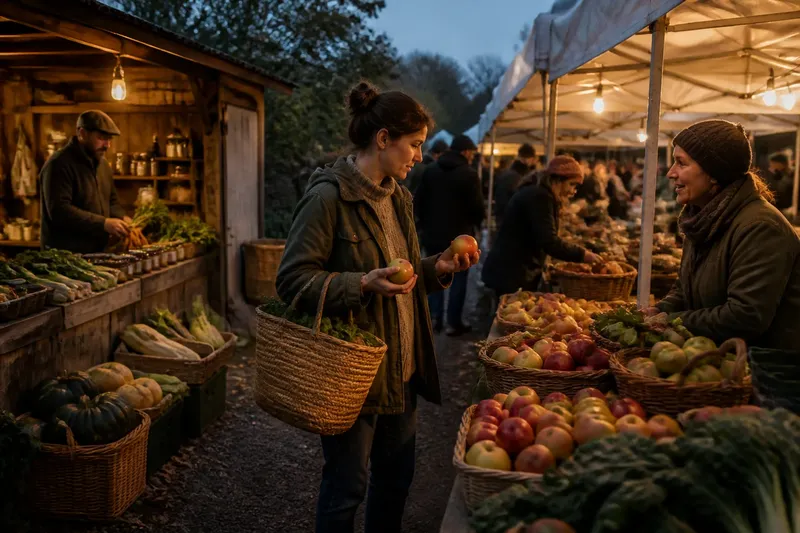
An ingredient becomes familiar when people can obtain it and know how to use it. It may come from a garden, a farm outside town, a market stall, a mill or a landing place for boats. Roads, rivers and trade bring in foods that do not grow nearby; migration brings new ingredients and ways of cooking.
That makes a regional food story broader than a map of local farms. A town’s daily meals may depend on nearby growers and goods arriving from elsewhere. Seasonal availability, storage and household budgets also affect which ingredients people use regularly.
- Check where the ingredient is grown or gathered. If local producers supply it, describe that link; if it mostly arrives from elsewhere, describe the trade route or supply source instead.
- Check when it is available. If it appears in a particular season, connect it to that period; if it is sold year-round, ask whether storage or imports explain the steady supply.
- Check who sells it and where. If it appears in everyday shops, it may be part of ordinary access; if it appears mainly at visitor-focused stalls, describe that narrower role.
- Check how people preserve it. If households dry, pickle or store it, mention that use; if they do not, avoid implying that preservation is a local custom.
- Check who uses it at home. If cooks describe regular household use, report that context; if use is occasional or limited to particular families, name that boundary.
- Check which occasions feature it. If it is served at a seasonal gathering, identify the occasion; if it is mostly sold as a souvenir or special treat, distinguish that from an everyday staple.
These checks turn a broad claim into a description of an ingredient’s actual route and role.
Habit and meaning
Repeated use gives an ingredient cultural meaning. It might appear in ordinary suppers, school meals, preserves, market stalls or food shared with neighbours. A local name or a seasonal association can make it easy to recognise without making it universal.
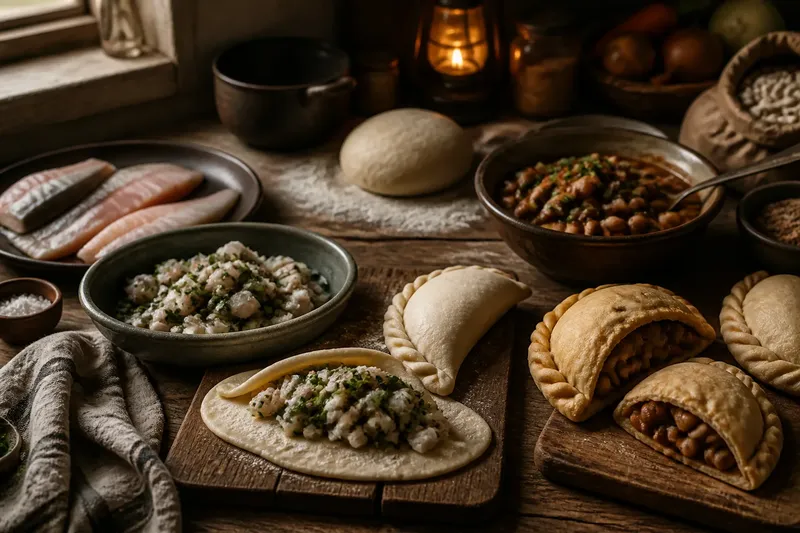
Imagine a coastal town where hardy greens appear at the greengrocer in the colder months. One household puts them in pie, another stirs them into broth, and a café serves them with eggs. The greens may signal the season to people who know them, while remaining unfamiliar to other residents.
The meaning can also shift. A crop once grown widely may become scarce as land use changes; a food brought in by newcomers may become familiar over time. Ask what people do with an ingredient now, as well as what they remember about it.
Reputation and daily use
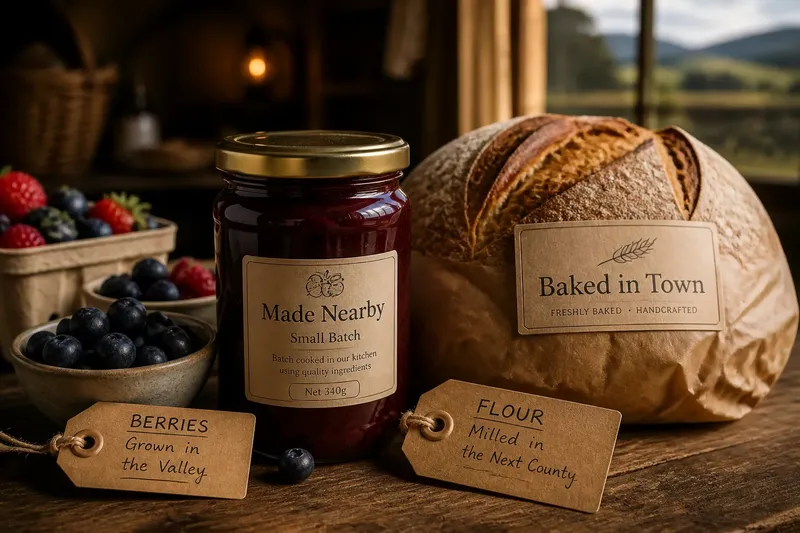
Local businesses, visitors and community groups all help shape an ingredient’s reputation. A food promoted at a festival may also be a household staple, but those roles are not the same. A celebrated product can represent a place in tourism even when many residents rarely eat it.
Listen for who is speaking and what setting they describe. A grower may focus on cultivation, a shopkeeper on demand, and a home cook on family habits. Their accounts can differ without cancelling one another.
When someone calls an ingredient “the food of” a place, ask whether they mean everyday use, a seasonal custom, a product sold to visitors or a symbol used in local promotion. Naming the context makes the claim clearer.
Questions about local ingredients?
Does a local ingredient have to be native?
No. An ingredient can become associated with a place after people introduce it, grow it and use it over time. Its history may include migration and trade as well as local growing conditions.
Can a food be regional if not everyone eats it?
Yes. Regional identity can describe a shared custom or reputation rather than a universal preference. Specify the communities, occasions or habits involved.
What if it is now brought in from elsewhere?
It may retain a local cultural role even if it is no longer grown nearby. Say where it comes from now, then distinguish that from its history or local use.
How can I tell whether the association is more than a label?
Look for evidence in ordinary settings, such as household use, local menus, seasonal customs and conversations with growers or cooks. If the connection appears mainly in promotion, describe it as a public image rather than a daily practice.
Trace one ingredient
Say you are writing about a fictional town’s “harbour beans”. For this invented example, assume a grower says the beans are now brought in from another region, a shopkeeper says they sell chiefly during the summer festival, and two home cooks say they use them in occasional family meals. Start by recording those three accounts separately. Then describe the present supply as imported, the festival as the main public setting, and household use as occasional. The resulting account can call harbour beans part of the town’s food story, but should not present them as a local crop or an everyday food for everyone.
For any ingredient, follow its path from source to kitchen: who produces or supplies it, when it is available, where it is sold and how people use it. The main phrase, why ingredients become tied to a place, is best answered through those specific links—not through a sweeping claim about everyone who lives there.