Farm Stall or Weekly Market: Two Ways to Meet Local Food
Farm stall or weekly market? Compare the choices, conversations and local food each setting offers, then pick the visit that suits your meal and time.
The common mistake when choosing a farm stall or weekly market is to assume both offer the same kind of local-food visit. That can leave you with the wrong fit: a single source when you need alternatives, or a broad browse when you wanted a closer look at one producer’s offer.
Different kinds of visit
A farm stall usually centres on one farm or a small group working from the same site. A regular market brings separate traders together on a set day. The practical difference is how many sellers you can compare and how closely the setting connects their goods to a place.
A stall beside an orchard, field or farmyard may show what one business grows or makes. A market lets you move between traders, comparing their produce, methods of selling and descriptions of the region. Neither setting tells the whole story by itself: a farm stall may stock goods from neighbouring makers, while a market trader may be a producer or a retailer.
Choose the setting that fits the decision you need to make, rather than assuming one is inherently more local or informative.
Choice and comparison
A farm stall concentrates attention on its own selection. That can suit a meal built around what is ready from one holding, but there may be fewer alternatives when you want to compare varieties or sources.
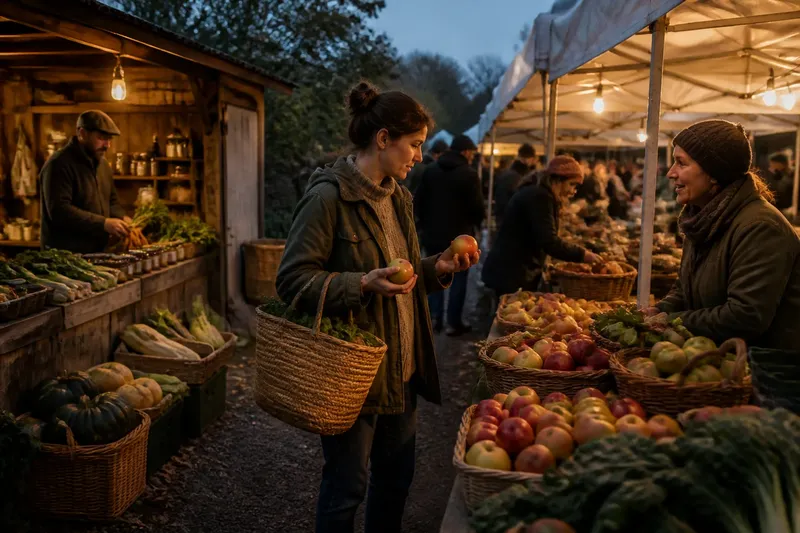
A market is useful when the comparison itself matters. You might look at several apple varieties, different breads or vegetables grown in different conditions. Ask sellers what distinguishes their offerings, then relate the answer to how you plan to cook or eat the food.
Say you need apples for a tart and have only a general idea of what works. At a market, you compare two sellers’ cooking apples, ask which holds its shape, and choose the one each seller identifies as firmer. Your resulting decision is to buy that firmer option for the tart; if neither seller can distinguish their apples clearly, choose a farm stall whose stock is described by variety instead.
Conversation by setting
At a farm stall, questions can focus on one producer’s current offer: what is ready, how a variety is used, or which goods come from the holding. If the person serving is not the grower, ask whether they can identify the source or suggest when to return for someone who can.
At a market, ask the same short question at more than one stall if you want a useful comparison. “Which is better for roasting?” or “What changes between these varieties?” invites practical answers without turning a purchase into an interview. If a queue forms, keep the exchange brief and let the next shopper speak.
For a less familiar ingredient, ask for one preparation detail that could affect your choice, such as whether it needs peeling or should be added early or late in cooking. That gives you information you can use at home.
Choose for the meal
Use this comparison before you set out. Each check points to a decision, with an alternative if the first choice does not fit.
- One ingredient is central: If you want to understand one farm’s crop or product, choose a farm stall; if you need to compare sources, choose a market instead.
- You need several kinds of food: If separate items are likely to come from different traders, choose the market; if the farm stall’s stated offer covers your list, choose it instead.
- You want alternatives: If comparing varieties or makers will shape your purchase, choose a market; if you already know what you want from one producer, choose the farm stall instead.
- You need a detailed answer: If a farm worker or producer is available, choose the stall for a focused question; if you want different sellers’ views, ask at the market instead.
- Your timing is tight: If one source can meet the main need, choose the farm stall; if a market brings your planned purchases together, choose it instead.
- Opening arrangements are unclear: If the stall or market has posted current hours and trader details, plan around them; if not, check its own notice before travelling or choose a venue with confirmed information.
Check the venue’s current opening information before leaving. A farm stall may use a staffed counter, shop or honesty box; market traders may not all attend every session.
Questions about markets?
Which suits seasonal produce better?
Either may offer seasonal food, but the selection depends on the particular farm or traders. Ask what is ready now, then choose the place whose answer fits your meal.
Can a farm stall stock other makers’ goods?
Yes, a stall may include products from neighbouring farms or local makers. If you want one producer’s own goods, ask which items come from that holding before choosing.
Does every market seller produce what they sell?
No; a market can include growers, makers and traders who source goods for resale. Check the seller’s description when the distinction affects your choice, rather than inferring it from the display.
What if I have little time?
Choose by the main task: one source and a focused purchase point towards a farm stall, while several comparisons point towards a market. Confirm the opening arrangements before setting out.
Read the encounter
A farm stall gives you a closer view of one business’s offer; a weekly market puts several sellers within reach. Those settings can overlap, so judge the particular visit by what you need to decide, the comparisons available and the answers a seller can give.
For a local-food choice, start with the meal or ingredient in front of you. If you need a focused account of one producer’s goods, the farm stall may be the better fit; if you need to weigh several options, the weekly market may serve you better. The useful distinction is not a claim about quality, but a way to choose the encounter that helps you buy with purpose.